
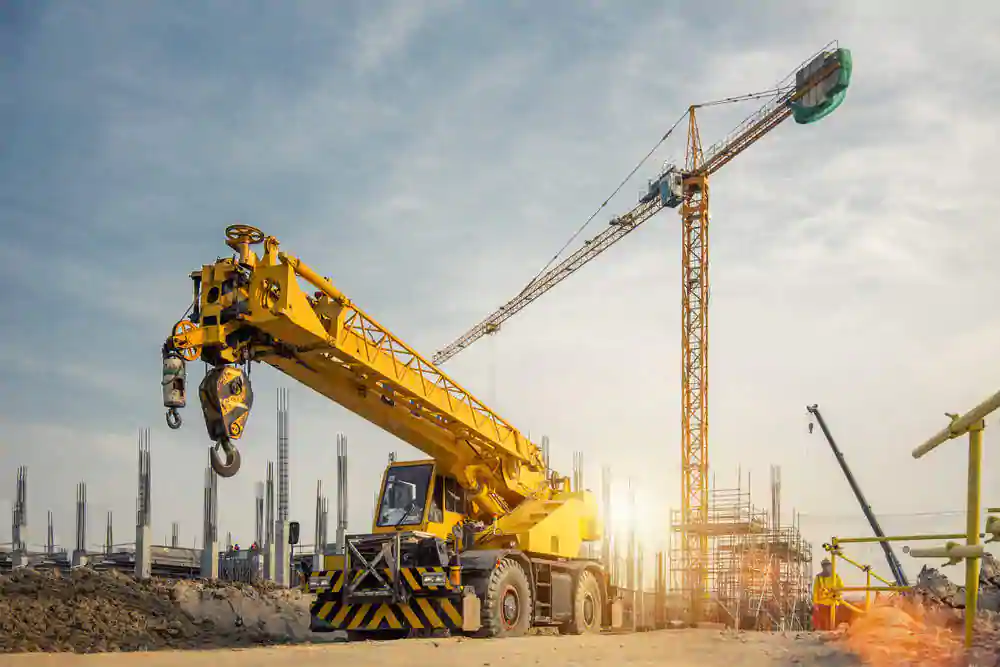
Construction crane rental can give a project access to the lifting capacity needed for heavy materials, structural components, machinery, and equipment without requiring a company to purchase and maintain a crane. Choosing the right crane, rental arrangement, and lifting plan can make a significant difference in job-site safety, scheduling, and overall project efficiency.
For contractors, developers, builders, and industrial teams, AZ Crane and Gapple understands that crane selection should never be based on lifting capacity alone. Site conditions, load dimensions, reach requirements, ground stability, project duration, and access limitations all influence which crane solution makes sense.
Why Construction Crane Rental Makes Sense
Purchasing a crane represents a major financial commitment. Beyond the initial purchase price, ownership can involve inspections, maintenance, storage, transportation, repairs, insurance, and operator considerations.
A rental approach can provide access to suitable lifting equipment for the period it is actually needed. This can be especially practical for projects where crane requirements change from one phase to another.
Key advantages can include:
- Access to equipment suited to specific lifting requirements
- Reduced capital expenditure compared with purchasing equipment
- Greater flexibility for short-term and project-based work
- Less responsibility for long-term equipment storage
- Easier planning around temporary lifting requirements
- Access to specialized equipment without permanent ownership
The right rental arrangement should still be evaluated carefully. A lower rental price does not necessarily represent the best value if the crane cannot safely reach the required location or handle the intended load.
Selecting the Right Crane for the Project
Every construction site presents different challenges. A crane that works effectively on an open commercial development may not be suitable for a confined residential site or a project with difficult access.
Before arranging equipment, identify several essential requirements:
- Load weight: Determine the maximum weight that must be lifted, including any relevant rigging equipment.
- Lift height: Establish how high the load needs to travel and where it must be positioned.
- Horizontal reach: Consider the distance between the crane and the final placement area.
- Site access: Check entrance dimensions, road conditions, overhead obstructions, and available working space.
- Ground conditions: Confirm that the intended crane position can support the equipment and lifting activity.
- Project schedule: Determine how long the crane will be required and whether multiple lifting phases are involved.
Providing accurate information before rental can help identify equipment that fits the actual requirements rather than relying on assumptions.
Construction Crane Rental Requires Careful Site Planning
A successful lift begins before the crane arrives. Site planning should account for the crane’s operating area, load path, surrounding structures, personnel movement, and potential hazards.
Overhead power lines, buildings, trees, narrow access routes, uneven ground, and nearby traffic can all affect crane operations. A detailed site assessment can help identify restrictions before equipment reaches the work area.
Communication is equally important. Everyone involved in lifting operations should understand the planned sequence, exclusion zones, signaling procedures, and responsibilities. Clear coordination helps reduce confusion when large loads are being moved in areas where visibility may be limited.
Consider Load Path and Placement
The shortest lifting route is not automatically the safest route. A load may need to pass around structures or other obstacles before reaching its final position.
Mapping the intended load path in advance allows project teams to identify potential conflicts and determine whether the selected crane provides sufficient reach and working clearance.
This planning becomes particularly important when lifting steel beams, trusses, concrete components, industrial equipment, roofing materials, or other large loads.
Avoid Choosing Equipment Based on Capacity Alone
Crane capacity charts provide important information, but maximum rated capacity does not mean a crane can safely lift that weight under every condition.
Capacity can vary depending on operating radius, boom configuration, counterweight arrangement, setup, and other factors. As the lifting radius increases, available capacity may decrease significantly.
For that reason, the required lift should be evaluated using the actual working conditions. A qualified rental provider can help determine whether a particular crane configuration is appropriate for the intended task.
This approach can prevent a common planning mistake: selecting a crane because its headline capacity appears sufficient while overlooking the effect of distance and configuration on actual lifting performance.
Working With an Experienced Crane Rental Provider
Equipment is only one part of a successful lifting operation. Experience and communication can also influence how smoothly a project progresses.
AZ Crane and Gapple provides crane rental solutions for construction and lifting requirements. When discussing a project, useful information can include the type of material being lifted, approximate weight, required height, placement location, site address, access conditions, and anticipated rental period.
The more complete the project information, the easier it becomes to discuss suitable equipment and identify potential site challenges early.
A professional conversation should address practical questions such as:
- What is the heaviest load?
- How far must the load travel horizontally?
- What is the maximum lifting height?
- Is there restricted access to the site?
- Are there overhead obstacles?
- What ground conditions are present?
- How frequently will lifting operations occur?
- How long will the equipment be needed?
These details can help establish a clearer rental plan and reduce avoidable delays.
Safety Should Remain Central to Every Lift
Heavy lifting requires disciplined planning. Crane operations should follow applicable safety requirements, manufacturer guidelines, site procedures, and qualified professional practices.
Loads should be properly secured, lifting areas should be controlled, and personnel should remain clear of suspended loads. Weather conditions can also affect lifting activities, particularly when wind or severe conditions may influence load stability.
Regular communication between operators, signal persons, riggers, supervisors, and other site personnel is essential. Everyone should understand the lifting plan before operations begin.
Safety is not simply a compliance issue. Good lifting practices protect workers, equipment, structures, materials, and project schedules.
How Better Rental Planning Can Reduce Delays
Construction schedules often depend on multiple activities happening in the correct sequence. If a crane arrives without sufficient capacity, cannot access the intended position, or requires unexpected setup changes, other trades may have to wait.
Early planning can reduce these problems.
A practical preparation process includes:
- Define the lifting requirements.
- Measure access and working areas.
- Identify obstacles and potential hazards.
- Confirm load weights and dimensions.
- Determine the required lifting height and radius.
- Discuss site conditions with the rental provider.
- Establish the expected rental period.
- Coordinate delivery and setup with the project schedule.
This preparation gives contractors a clearer understanding of what is required before the lifting equipment reaches the site.
Cost Is More Than the Daily Rental Rate
Comparing crane rentals solely by advertised rates can create an incomplete picture of project cost. Transportation, setup, operating requirements, rental duration, site preparation, and potential downtime can all influence the final expense.
A crane that costs slightly more to rent but fits the job precisely may provide better project value than a cheaper option that requires additional preparation or cannot perform the planned lifts efficiently.
The objective should be to match equipment to the work rather than simply selecting the lowest initial price.
Final Thoughts on Construction Crane Rental
Construction crane rental can be a practical solution when a project requires reliable lifting capability without the long-term responsibilities associated with crane ownership. The best results come from matching equipment to the load, understanding site conditions, planning the lifting path, and communicating requirements clearly before work begins.
Careful preparation also gives contractors a stronger foundation for managing safety, scheduling, and project costs. For upcoming lifting requirements, contacting AZ Crane and Gapple with detailed project information can help start the equipment selection process on the right footing.