A water treatment system is one of those home or business investments that often goes unnoticed when everything is working properly. The water tastes good, appliances run as expected, and there’s no constant battle with mineral deposits around sinks and showers. But behind that everyday convenience is a system that needs a little attention to keep performing well.
Like any equipment that handles water day after day, filtration and softening systems rely on routine care. Filters become clogged, softener salt runs low, and components eventually need inspection or replacement. None of this is unusual. In fact, regular upkeep is often what separates a dependable water treatment system from one that gradually becomes less effective.
The trick is to make maintenance part of your routine rather than waiting until something goes wrong.
Why Routine Water Treatment Maintenance Matters
Water treatment equipment works under different conditions depending on the property and its water supply. A household using moderately hard municipal water may have very different needs from a business operating with well water or handling heavy daily demand.
Over time, sediment can collect in filters, treatment media can lose effectiveness, and mineral deposits may affect certain components. A system that once delivered consistent results might begin to show subtle warning signs, such as reduced water pressure, changes in taste, or spots appearing on glassware.
These symptoms don’t always mean the equipment has failed. Sometimes, a filter needs replacing or a softener needs attention. Still, ignoring them can allow small problems to develop into more expensive repairs.
Routine maintenance helps identify wear early, supports consistent performance, and gives property owners a clearer picture of their system’s condition. It also makes budgeting easier because scheduled service is generally less disruptive than an unexpected breakdown.
Don’t Overlook Salt Levels in a Water Softener
For properties with hard water, a water softener can make everyday tasks noticeably easier. By reducing calcium and magnesium, the system helps limit scale buildup on fixtures, water heaters, and other equipment. Many conventional softeners use salt during regeneration, which restores the resin’s ability to remove hardness minerals.
That process depends on having an adequate supply of the appropriate salt. If the brine tank runs low, the softener may not regenerate as intended, and hard water can begin passing through the system.
Regular salt delivery can be a practical option for households or businesses that prefer not to carry heavy bags, monitor supplies constantly, or risk running out unexpectedly. It’s particularly useful for busy properties where maintenance tasks can easily slip down the to-do list.
Even with scheduled deliveries, it’s sensible to check the brine tank occasionally. Salt consumption varies according to water hardness, household size, water usage, and the softener’s settings. Too much salt can also contribute to bridging or mushing under certain conditions, preventing the system from using it properly.
Follow the manufacturer’s instructions for checking the tank and adding salt. If you notice a hard crust forming above the water or salt that seems stuck together, ask a qualified technician how to address it safely.
Installation Sets the Stage for Long-Term Performance
Maintenance matters, but the way a system is installed can influence its performance from the very beginning. Equipment must be sized appropriately, connected correctly, and configured to suit the property’s water conditions.
For example, a filtration system installed without considering peak water demand may struggle when several taps are running at once. A softener that isn’t configured for local water hardness may regenerate too frequently or fail to deliver the expected results. Poorly planned drainage or plumbing connections can create additional complications.
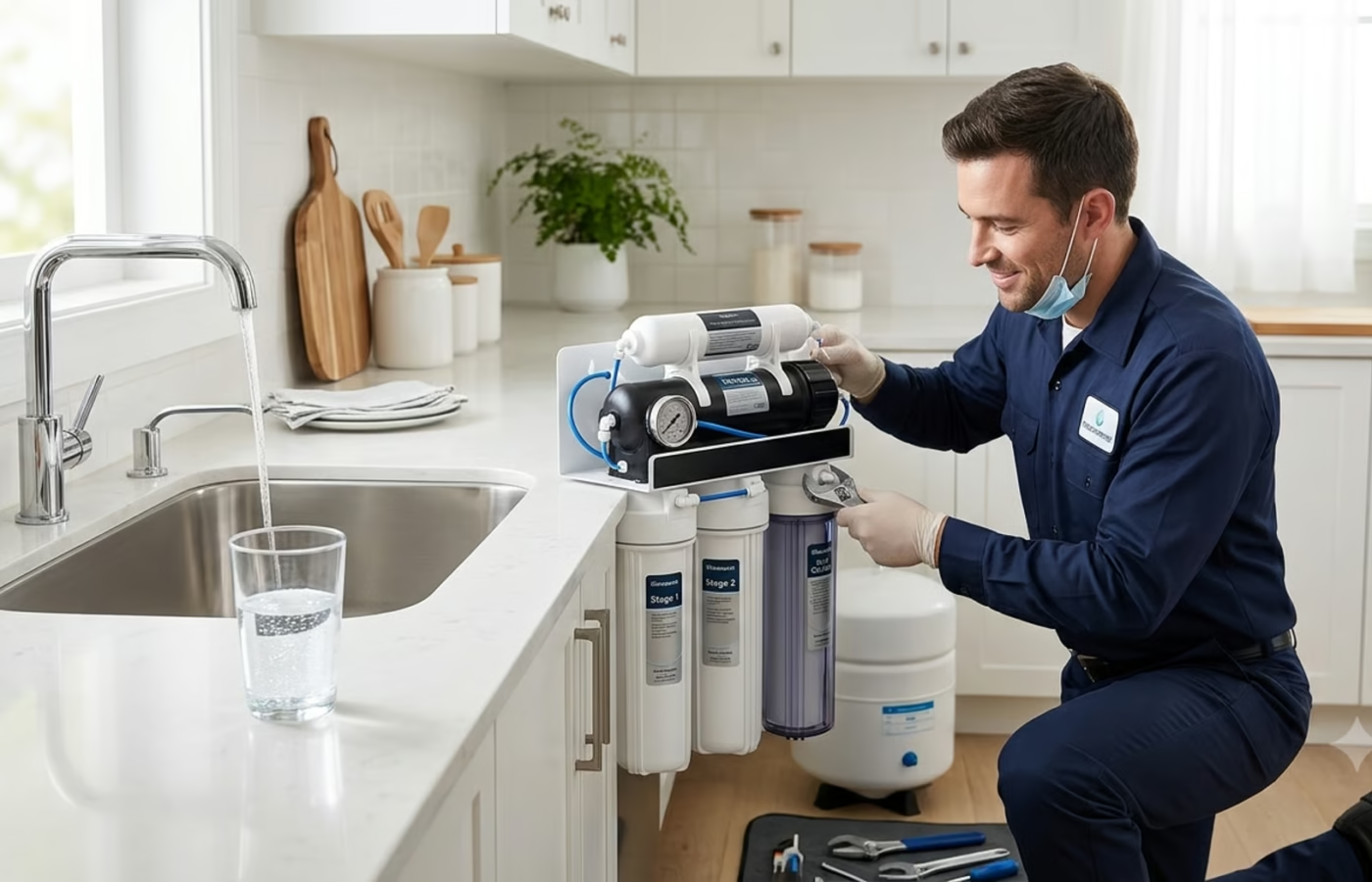
Choosing professional installation helps reduce these risks. A qualified installer can review the plumbing layout, check system requirements, and explain how the equipment should operate. They can also identify practical issues, including available installation space, access for filter changes, and whether electrical connections or drainage arrangements are needed.
Before work begins, ask what the installation includes. Will the technician test the system after setup? Will they explain the controls and maintenance schedule? Is removal of old equipment covered? Clear answers help prevent surprises later.
Once the system is operating, keep the installation paperwork and product manuals somewhere accessible. These records can be useful when ordering replacement filters, arranging repairs, or checking warranty requirements.
What Should a Regular Service Visit Include?
The right service schedule depends on the type of equipment, manufacturer recommendations, incoming water quality, and how heavily the system is used. Some filters need replacement every few months, while others can last considerably longer. A water softener may need less frequent attention, although its settings, valves, resin, and brine system still deserve inspection.
A comprehensive maintenance visit may include checking for leaks, examining connections, reviewing system settings, inspecting filter condition, and confirming that the equipment is operating within its intended range. Depending on the system, a technician may also test water quality before and after treatment or inspect components that are more susceptible to wear.
Not every service visit needs to involve replacing parts. Sometimes the most valuable outcome is simply confirming that everything is functioning correctly and identifying what to watch over the coming months.
Property owners should ask for a clear explanation of any recommended repairs. If a component needs replacing, find out why, what the replacement will accomplish, and whether the issue affects water quality or equipment operation. Good service should leave you better informed, not confused by technical language.
Warning Signs You Shouldn’t Ignore
Water treatment problems don’t always arrive with a dramatic leak or complete system failure. More often, the first signs are small enough to dismiss.
Pay attention if you notice a sudden change in water taste or odor, a drop in water pressure, persistent scale deposits, or a softener that seems to use salt unusually quickly. You may also hear unfamiliar noises during regeneration or notice moisture around the equipment.
These changes can have several causes, so avoid assuming that a single symptom points to a specific fault. A clogged filter, incorrect setting, plumbing issue, or change in the incoming water supply could all be involved.
If you suspect contamination or a sudden change in drinking-water safety, stop relying on assumptions and seek appropriate water testing or guidance from the relevant water provider. Maintenance can support a treatment system, but it cannot guarantee that every possible contaminant is removed.
Keep a simple record of filter changes, service visits, and unusual observations. It takes very little effort and can help a technician identify patterns if a problem returns.
Plan for Maintenance Instead of Reacting to Problems
A practical maintenance plan doesn’t need to be complicated. Start by reviewing the manufacturer’s recommendations and identifying which tasks you can safely handle yourself. Checking salt levels, watching for leaks, and recording filter replacement dates may be reasonable routine tasks. Internal repairs, electrical work, and adjustments requiring specialized knowledge are better left to qualified professionals.
For commercial properties, maintenance planning is especially important. Water treatment equipment may support daily operations, and unexpected downtime can affect staff, customers, and equipment. Scheduled inspections and replacement supplies help keep essential systems available when they’re needed.
It can also be useful to set reminders for upcoming service dates and keep replacement parts or filters on a predictable schedule. The goal isn’t to spend more time thinking about water treatment. It’s to make sure the equipment continues doing its job without unnecessary disruption.
Reliable Water Starts With Consistent Care
A well-maintained water treatment system can make daily life more convenient, but reliable performance rarely happens by accident. Appropriate installation, timely filter changes, adequate softener salt, and regular inspections all play a role.
Take a few minutes to understand your equipment and what it needs. Address small warning signs early, keep useful service records, and seek professional help when a problem falls outside routine care.
With a sensible maintenance plan, you can reduce avoidable surprises, protect your investment, and enjoy greater confidence in the water treatment equipment your home or business depends on every day.